Table of Contents
- What Makes Texas BBQ Different from Other Regional Styles
- The Four Regional Styles of Texas Barbecue
- Understanding the Key Ingredients and Seasonings
- Where to Buy Authentic Texas BBQ Near Austin
- How to Choose and Buy Texas BBQ Like a Local
- Texas BBQ Seasonality and Availability
- Frequently Asked Questions About Buying Texas BBQ
- How to Prepare and Store BBQ if You Buy It to Take Home
- Understanding Texas BBQ Regional Variations by County
Texas barbecue is not just food. It is a living tradition that tells the story of cattle ranchers, German and Czech immigrants, and Mexican pit-cooking techniques blended into something uniquely Texan. When you search for “authentic Texas BBQ” or “barbecue in Texas,” you are looking for more than smoke and meat. You are looking for generations of knowledge about how to transform simple ingredients into something that makes people wait in line for hours. This guide cuts through the marketing and gives you the real story about buying, understanding, and experiencing Texas BBQ the way locals do.
Key Takeaways
- Texas BBQ comes in four distinct regional styles, each with different cooking methods, seasonings, and wood choices
- Central Texas style (the Austin approach) uses minimal seasoning and lets the smoke and meat quality shine through
- Authentic Texas BBQ joints often have lines because they cook to order and limit daily quantity
- The “holy trinity” of Texas BBQ meat is beef brisket, pork ribs, and smoked sausage
- Where you buy matters as much as what you buy. Family-run pits with wood smokers beat chains every time
What Makes Texas BBQ Different from Other Regional Styles
If you have eaten BBQ from North Carolina, Kansas City, or Memphis, you might wonder what separates Texas barbecue from the rest. The answer comes down to meat selection, cooking philosophy, and cultural history.
Texas BBQ centers on beef. While other regions treat pork as the star, Texas pitmasters built their reputation on brisket, a tough cut from the cow’s chest that becomes tender and juicy only through hours of low-temperature smoking. A great brisket requires 12 to 16 hours of cooking at 225 to 275 degrees Fahrenheit. This is not something you can rush. This is not something you can fake with a sauce.
The seasoning philosophy also differs significantly. Central Texas BBQ, which dominates Austin and the surrounding Hill Country, uses salt and black pepper. That is it. No sugar in the rub. No ketchup-based sauce on the meat itself. The idea is that if your brisket is cooked properly, it does not need help. This approach separates authentic Texas pitmasters from those who hide mediocre meat under heavy sauce.
The smoking wood matters too. Texas pitmasters prefer mesquite and post oak because both woods burn hot and clean, creating smoke that adds flavor without overwhelming the meat. Kansas City uses hickory. The Carolinas use hickory or oak. Texas chose a different path, and that choice shows up in every bite.
Finally, the cultural mix that built Texas BBQ is unique. You see German influence in the sausage traditions of Central Texas. You see Czech influence in the way some pits operate like old-country delis. You see Mexican influence in the South Texas barbacoa style and the way carnitas and BBQ blend together seamlessly in Austin. No other region has quite this same combination of influences.

The Four Regional Styles of Texas Barbecue
Texas is large enough to contain vastly different BBQ traditions within its borders. Understanding these four regional styles helps you make better choices about where to buy and what to expect.
Central Texas Style: The Minimalist Approach
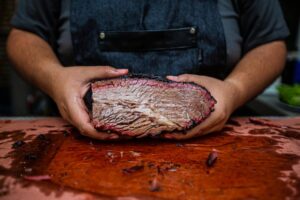
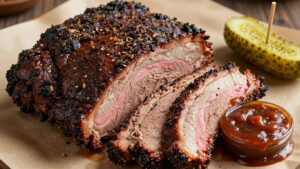
Central Texas BBQ is the style most associated with Austin. It is built on the idea that great meat needs nothing but salt, pepper, and smoke. A good Central Texas brisket shows a dark, crusty exterior called the bark, and when you cut into it, the meat pulls apart easily with a slight resistance. The smoke ring (a pink layer just under the bark caused by smoke penetration) should be visible. The flavor is pure beef and woodsmoke, nothing else.
Central Texas pitmasters typically use post oak or pecan wood. These woods burn clean and hot, creating blue smoke that builds flavor without creating acrid, unpleasant notes. The cooking temperature runs between 250 and 275 degrees Fahrenheit. The goal is indirect heat. You do not want your meat sitting directly over flames. You want it bathed in steady, moderate heat for hours.
This style emerged because Central Texas has a history of cattle ranching and German immigration. German settlers brought their meat-smoking traditions. Local ranchers had abundant beef. The combination created a style focused on showcasing the meat itself. Sauce comes on the side, if at all. Many Central Texas joints offer a thin vinegar sauce or no sauce at all.
Franklin Barbecue, La Barbecue, and Micklethwait Craft Meats all follow the Central Texas style. They cook briskets the same way their mentors did decades ago. Their prices reflect the quality, but they also reflect the reality that good brisket requires expensive meat and long cooking times with no shortcuts.
East Texas Style: The Saucy Tradition
Travel east from Austin toward places like Nacogdoches or Henderson, and you enter a different BBQ world. East Texas style uses sauce. Lots of it. The sauce tends toward sweet and tomato-based, similar to Kansas City style. Meats are often chopped rather than sliced. Brisket becomes pulled brisket served on a bun with coleslaw, which itself gets mixed into the meat.
East Texas pitmasters often use hickory wood rather than post oak or mesquite. Hickory creates a sweeter smoke profile that pairs well with the sweet sauce. The cooking approach is often “low and slow,” but the focus shifts from presenting the perfect slice of brisket to creating meat that shreds easily and absorbs sauce.
This style reflects the region’s historical connections to the Carolinas and the Mississippi River. Early settlers brought their BBQ traditions with them. Local pitmasters adapted those traditions to what they had available locally: hickory forests and beef cattle. The result is a hybrid that feels familiar to people from other regions but distinctly Texan in execution.
If you travel east from Austin to places like Crockett or Alto, you will find BBQ joints that look nothing like Franklin Barbecue. They serve chopped brisket sandwiches with pickles and onions on the side. They offer ribs that fall off the bone so easily they almost do not need teeth. Many still use barrel smokers and cook over direct heat.
West Texas Style: The Direct Heat Method
West Texas means Lubbock, Odessa, Midland, and the high plains. It means cattle ranches that stretch for miles. It means less water, more wind, and a grilling culture that embraces direct heat and mesquite wood.
West Texas BBQ is not low and slow in the way Central Texas is. Instead, pitmasters cook over direct mesquite heat at higher temperatures, sometimes 300 degrees or more. The meat gets a heavy char, almost black on the outside. The cooking time is shorter. A brisket might cook in 8 to 10 hours rather than 14 to 16. The result is a different texture and flavor profile: more char, more crust, less smoke ring, but a strong mesquite flavor that some love and others find harsh.
West Texas style is less common in Austin, but it shows up in some joints. It reflects the grilling culture of the region and the way ranchers cooked meat outdoors on open fires. There is a rough-around-the-edges quality to West Texas BBQ. It is honest and unapologetic.
South Texas Style: The Barbacoa Connection
South Texas, the region south and west of Austin toward San Antonio and the border, blends Texas BBQ with Mexican barbacoa traditions. Barbacoa originally meant meat (often goat or lamb) cooked in a pit covered with maguey leaves. South Texas pitmasters adapted this method to beef and updated it with modern smokers, but the spirit remains.
South Texas BBQ features thicker, more molasses-like sauces. The meat is cooked until it practically falls apart. The flavor profile is richer and spicier than Central Texas. You see more use of cumin, chiles, and other spices. The meat absorbs these flavors during long cooking times.
In Austin, you see South Texas style creeping in at some joints, especially those owned by Texans with family connections to San Antonio or further south. The style is becoming more popular as Austin’s population diversifies.
Understanding the Key Ingredients and Seasonings
Learning to buy good Texas BBQ means understanding what goes into making it. At its heart, Texas BBQ cooking relies on just a few ingredients: meat, salt, pepper, and smoke. But those simple inputs create infinite complexity.
The Meat Selection
Beef brisket is a specific cut. It comes from the lower chest of the cow. A whole brisket (called a “packer brisket” in the industry) includes two muscles: the flat and the point. The flat is lean and slices cleanly. The point is fattier and shreds more easily. A good packer brisket weighs 12 to 18 pounds. The best ones come from grass-fed or pasture-raised cattle with good marbling (fat distributed throughout the muscle).
Pork ribs come in several varieties. Baby back ribs are smaller and more tender. St. Louis style ribs are larger and meatier. Beef ribs (short ribs) are enormous, some weighing half a pound or more. Good pitmasters source their ribs from butchers who understand the cut and age the meat properly.
Sausage in Texas BBQ usually means smoked sausage, often with German or Czech style spicing. The best sausages are made in-house by the BBQ joint. You can tell when a sausage is homemade by the way it looks: irregular casings, varied thickness, evidence of hand-linking. Factory sausage has a uniform appearance that suggests it came from somewhere else.
The quality of the meat you buy or eat determines the quality of the final product. No amount of smoke or technique can fix a poor brisket. This is why real pitmasters spend time developing relationships with their meat suppliers. This is why Franklin Barbecue pays premium prices for the brisket they serve. You get what you pay for.
The Dry Rub and Seasoning Strategy
Central Texas dry rubs typically contain salt and black pepper. Some pitmasters add more than that. You might see paprika, garlic powder, cayenne, brown sugar, or other spices. But the foundational philosophy stays the same: simplicity. The rub is meant to complement the meat, not mask it.
The rub goes on the meat anywhere from 4 hours to overnight before cooking. Some pitmasters apply it the night before. Others apply it just before the meat goes on the smoker. The timing affects how much the rub penetrates and how much sticks to the surface.
Good pitmasters understand that the rub interacts with the meat during cooking. Salt draws out moisture initially, but then that moisture reabsorbs, carrying salt flavor deeper into the meat. Black pepper becomes more complex when exposed to smoke and heat. A rub that looks simple on paper becomes something more complex on the plate.
The Smoke and Wood Selection
Mesquite and post oak dominate Texas BBQ for good reasons. Mesquite burns hot and fast. It creates a strong, sometimes peppery flavor. Post oak burns slower and cooler. It creates a milder, less acrid smoke. Many Central Texas pitmasters blend the two woods or switch between them during cooking.
The wood must be seasoned properly. Green wood creates acrid smoke that tastes bitter. Well-seasoned wood (12 months old or older) creates clean smoke that adds flavor without bitterness. Professional pitmasters buy wood from suppliers who understand these distinctions.
The color of the smoke matters. Blue smoke is the goal. Thick white smoke suggests the fire is not hot enough. Black smoke suggests the fire is too hot and the wood is burning without oxygen. Experienced pitmasters can tell the temperature and wood quality of their smoker by looking at the smoke.
Where to Buy Authentic Texas BBQ Near Austin
Austin has become the epicenter of Texas BBQ culture, at least in terms of popularity and media attention. But not all Austin BBQ joints are created equal. Here is how to separate the real thing from the hype.
| Restaurant | Style | Signature Item | Wait Time Reality | Price Range |
|---|---|---|---|---|
| Franklin Barbecue | Central Texas | Brisket | 2 to 4 hours most days | $20 to $25 per pound |
| La Barbecue | Central Texas | Brisket, pulled pork | 30 minutes to 1 hour | $18 to $22 per pound |
| Micklethwait Craft Meats | Central Texas | Homemade sausage | 20 to 45 minutes | $15 to $18 per pound |
| Terry Black’s Barbecue | Central Texas | Beef ribs, sausage | 20 to 60 minutes | $16 to $20 per pound |
| Stiles Switch BBQ | Central Texas | Brisket, smoked turkey | 15 to 45 minutes | $16 to $19 per pound |
Franklin Barbecue: The Benchmark
Franklin Barbecue opened in 2009 as a food trailer. The founder, Aaron Franklin, trained under established pitmasters and brought an obsessive attention to detail to every aspect of the operation. He focused on brisket quality, wood selection, and cooking technique. He did not cut corners.
Franklin Barbecue operates by opening at 11 AM and closing when they run out of meat. They do not take reservations. You show up, get in line, and wait. Some days the wait is 2 hours. Some days it is 4 hours. People wait because the brisket is exceptional: proper smoke ring, perfect crust, tender and juicy throughout. The sausage is made on-site and has a snap to the casing with good spicing. The ribs fall off the bone without being mushy.
If you are new to Texas BBQ, Franklin Barbecue is a logical starting point. It represents the Central Texas style at its best. The downside is the wait and the tourist crowds. If you arrive after noon, expect a long line. If you want to experience Franklin without the massive wait, arrive by 10:45 AM when the line is already long but more manageable.
La Barbecue: The Local Choice
La Barbecue occupies a sweet spot between accessibility and quality. The line is usually shorter than Franklin, but the meat is exceptional. The brisket rivals Franklin’s. The pulled pork is one of the best in Austin. The ribs are tender without being falling-apart mushy.
La Barbecue also excels in the details that make for a good BBQ experience. Their homemade pickles are crispy and flavorful. Their sides are not afterthoughts. The mac and cheese has a good cheese flavor without being gloppy. The pinto beans have depth from slow cooking.
The location on Rainey Street offers a slightly more casual atmosphere than Franklin. The staff moves people through quickly without being rude. If you are buying for a group, La Barbecue is often the better choice because the owner can estimate how much meat you need and has it ready more quickly than places that cook to exact order.
Micklethwait Craft Meats: The Innovators
Micklethwait started as a food trailer and expanded but kept the food trailer mentality: focus on quality, limit daily production, keep it simple. They specialize in smoked meats, but their sausage is their calling card. It is homemade, finely spiced, and cooked to a perfect snap on the outside and juiciness inside.
Micklethwait breaks the traditional BBQ mold slightly with creative sides like jalapeno cheese grits and smoked beets. These sides should not work, but they do because they are cooked with the same attention to detail as the meat. The founders are not trying to reinvent Texas BBQ. They are trying to do it better and with more creativity in the supporting elements.
The wait at Micklethwait is usually manageable (under 45 minutes most days), and the experience feels less like a tourist event and more like a real neighborhood spot. Many Austin locals prefer Micklethwait to Franklin for exactly this reason.
Terry Black’s Barbecue: The Family Operation
Terry Black’s represents old-school Austin BBQ. It has been around for decades. The operation is still run by the founding family. The meat is excellent, especially the beef ribs, which are some of the largest and most flavorful in Austin. The sausage is made by someone who knows what they are doing.
Terry Black’s pricing is reasonable given the quality. The atmosphere is genuinely friendly in a way that feels authentic rather than manufactured. You can tell that the people working there are invested in the business and the quality. The wait times are usually short, making it a good option if you do not have hours to spend in line.
Stiles Switch BBQ and Brew: The Casual Option
Stiles Switch combines decent BBQ with craft beer and a lively atmosphere. The brisket is good but not exceptional. The sausage is decent. The smoked turkey is one of their strengths. The beer selection is extensive, and the social atmosphere is pleasant.
If you want BBQ without the pilgrimage mentality, Stiles Switch works well. You can get a table easily. You can have a beer while you eat. You can sit for as long as you want without feeling rushed. The quality is high enough that it feels authentic, but the focus is broader than meat alone.
How to Choose and Buy Texas BBQ Like a Local
Beyond knowing where to go, locals understand how to navigate a BBQ joint, what to look for, what questions to ask, and how to evaluate what you are getting for your money.
Signs of Authentic Operation
Real Texas BBQ joints have several telltale signs. First, there is usually a line. If there is no line at a BBQ joint, it is either very new or something is wrong with the meat. Locals will not wait in line for mediocre BBQ, so a line is a good sign.
Second, the joint runs out of meat. If a BBQ place is still serving the same amount of brisket at 5 PM that they were at 11 AM, they are cooking too much, which means they are cooking ahead rather than cooking fresh. Fresh is better. Running out means they calculated right and sold everything they cooked that morning.
Third, there are no fancy sauces. Real Texas BBQ joints offer sauce, but usually just one or two simple options. If the menu has more sauce varieties than meat options, it is a red flag that they are trying to compensate for mediocre meat with condiment variety.
Fourth, the operation looks a little rough. Professional kitchens are sterile and white and clean. Real BBQ joints have character. There might be smoke stains on the walls. The floor might be worn. The counter might be old. This roughness often indicates that the operators spend money on the smoker and the meat, not on aesthetics.
Fifth, the owner is present. Walk in during lunch. Look around. Real pitmasters and owners are in their kitchens. They are checking meat. They are training staff. They are engaged. If the place feels like a franchise with a corporate manager, it is probably not optimizing for quality.
What to Order and How Much to Buy
Most Texas BBQ joints sell meat by the pound. A standard order for one person is about a half pound of meat. Two people might split a pound. A group of four might order 2 to 3 pounds.
If you are trying a new place, order the brisket first. Brisket quality tells you everything about the operation. If the brisket is excellent, other meats are usually good too. If the brisket is mediocre, do not expect the ribs to be exceptional.
Beyond brisket, order one other meat: ribs or sausage. This gives you a sense of the full range. Skip the pulled pork or chopped brisket if you want authentic Central Texas style. Those are East Texas adaptations. In Central Texas, you get sliced brisket.
Do not skip the sides. They matter more than most people think. Good sides indicate that the operation cares about more than just meat. Good pinto beans should taste like they have been cooking for hours with salt pork. Good mac and cheese should have a sharp cheddar taste and a crispy top. Good coleslaw should be fresh and slightly acidic.
Paying for Quality
Good Texas BBQ costs money. A pound of quality brisket in Austin runs between $18 and $25. That pricing reflects several realities. First, beef brisket is expensive. A pitmasters might pay $4 to $7 per pound for good quality raw brisket. That is just the cost of ingredients before any cooking happens.
Second, cooking takes time. A single brisket ties up a smoker for 14 to 16 hours. That is an opportunity cost. The smoker cannot cook anything else during that time. Smaller joints with one or two smokers can only cook a certain amount of meat per day.
Third, fuel is expensive. Real wood costs money. A quality smoker burning wood all day uses a significant amount of fuel. Some joints calculate fuel costs at $5 to $10 per brisket.
Fourth, labor costs are real. Good pitmasters are worth good money. If a BBQ joint is paying minimum wage to someone cooking their brisket, that is a red flag. Good operations pay for skilled labor because skilled labor produces better product.
If a BBQ joint is offering brisket for $10 per pound, something is wrong. Either the meat is poor quality, the cooking is rushed, the operation is subsidizing BBQ with another food source, or they are losing money. None of these scenarios results in great BBQ.
Texas BBQ Seasonality and Availability
Texas BBQ operates differently in summer than in winter. Understanding these seasonal variations helps you time your purchases and set expectations.
Summer Barbecuing
Summer (May through September) is peak BBQ season in Austin. The weather is hot and people want to eat outdoors. BBQ joints are busy. Lines are longer. Some joints run out of meat earlier. Locals who want to avoid crowds know to arrive early, by 11:15 AM if possible.
Summer is also when many neighborhoods have backyard BBQ parties. If you are buying BBQ to serve at a party, order a day or two in advance if the operation allows it. Most Austin BBQ joints cook fresh daily and do not take pre-orders, but it is worth asking.
Winter and Holiday Demand
Winter brings different patterns. Holiday periods (Thanksgiving, Christmas) see surges in BBQ interest. People buy BBQ for holiday gatherings. Some joints offer family packs or special pricing during holidays.
Winter itself is slower. Lines are shorter. It is easier to get good BBQ without waiting. But winter also means some outdoors joints get less traffic and cook less meat. Be aware that in January and February, some smaller operations might reduce hours or close specific days.
Frequently Asked Questions About Buying Texas BBQ
What is the difference between authentic Texas BBQ and competition BBQ?
Authentic Texas BBQ, the kind served in restaurants and joints, optimizes for flavor and consistency. Competition BBQ, the kind entered in contests, optimizes for scoring in judged categories. Competition brisket is often more uniform, more sliced to a specific thickness, and sometimes cooked to be slightly more tender than restaurant brisket. If you are eating at a restaurant owned by a competition champion, that person’s competition experience shows up in their technique. But competitive success does not always translate to better everyday BBQ. Many of the best restaurant pitmasters have never competed.
Is store-bought BBQ from grocery stores the same quality as restaurant BBQ?
No. Grocery store BBQ is cooked ahead, packaged, and held at temperature. This process causes the meat to dry out and lose texture. Restaurant BBQ is cooked fresh and served immediately. The texture and moisture are completely different. Grocery store brisket becomes gray and stringy. Real smoked brisket stays pink under the bark and remains juicy. If you are going to buy Texas BBQ, buy it from a restaurant, joint, or food trailer that cooks it that day.
What should I expect to pay for quality Texas BBQ in Austin?
Brisket runs between $18 and $25 per pound at quality joints. Pork ribs run between $15 and $22 per pound. Sausage runs between $14 and $20 per pound. A typical meal for one person (about a half pound of meat with sides and bread) runs $15 to $20. A family of four eating BBQ together can expect to spend $60 to $100 total. These prices reflect the cost of quality meat, fuel, labor, and skilled cooking. Do not expect good BBQ for $10 per pound.
How can I tell if brisket is overcooked or undercooked?
Good brisket should pull apart easily with a toothpick but should not be mushy or stringy. The meat should have a slight resistance when you bite it, then it should yield completely. The interior should be moist. If you cut into a slice and it falls apart into strings, it is overcooked. If you have to pull and tear to get a piece off, it is undercooked. The best test is to probe the meat with a toothpick. It should slide through the meat with about the same resistance as sliding through butter. Experienced pitmasters know this by feel, but for customers, just bite it and see if it chews the way meat should.
Why do I have to wait in line so long at some BBQ places?
You wait because the operation cooks to order, in batches, rather than cooking a massive batch ahead and holding it. They cook your brisket at the time you order, which is why you do not get your food immediately. Franklin Barbecue specifically slow-cooks briskets and keeps them at specific temperatures until you order. Moving a hot brisket from the smoker to the counter takes time. Slicing it properly takes more time. This wait is actually a good sign. It means they are not reheating pre-cooked meat. However, some joints also have lines because they are inefficient or because they limit portions. The reason matters.
How to Prepare and Store BBQ if You Buy It to Take Home
Texas BBQ is best eaten immediately from the joint. But sometimes you need to buy it, transport it, and eat it later. Here is how to maintain quality through that process.
Transportation and Timing
Transport hot BBQ in an insulated bag or container within 30 minutes of purchase. The longer the meat sits, the more it dries out. If you are driving more than 30 minutes, keep the container closed and transport it as quickly as possible. Do not open it to check on the meat. Every time you open it, heat escapes and moisture is lost.
If you are buying BBQ for a party scheduled hours later, consider buying it closer to serving time. BBQ is better served hot and fresh than reheated. If you must buy it early, keep it in a low oven (around 200 degrees Fahrenheit) in a covered container until serving time.
Reheating BBQ
If you have leftover BBQ or you bought it the day before, reheat it gently. The worst thing you can do is microwave it, which creates tough, stringy meat. Instead, wrap it in foil and place it in a 300-degree Fahrenheit oven for 15 to 20 minutes. You can also reheat it in a slow cooker on low for 30 minutes to an hour.
Some people add a small amount of broth or water to the foil package to add moisture during reheating. This helps restore some of what is lost through cooling and storage. Do not add sauce until after reheating.
Storage Guidelines
Cooked BBQ can be refrigerated for 3 to 4 days in an airtight container. It can be frozen for up to 3 months. If you freeze BBQ, let it thaw in the refrigerator overnight before reheating. Do not thaw it at room temperature, which can allow bacteria to grow.
Understanding Texas BBQ Regional Variations by County
Beyond the four main regional styles, Texas BBQ varies by specific counties and cities. Understanding these micro-variations helps you appreciate the full range when you travel across the state.
Travis County and Austin
Austin is Central Texas style with a modern twist. Traditional pitmasters like Aaron Franklin brought obsessive attention to detail to cooking methods that had been in place for decades. Austin BBQ represents the best of Central Texas tradition updated with modern sourcing practices. The city has also seen an influx of food truck operators who treat BBQ as a craft food elevated to restaurant quality.
Williamson County and the Hill Country
Just north of Austin, Williamson County and the Hill Country offer a slightly different take. Family operations here often go back multiple generations. The style remains Central Texas, but the feel is less trendy.